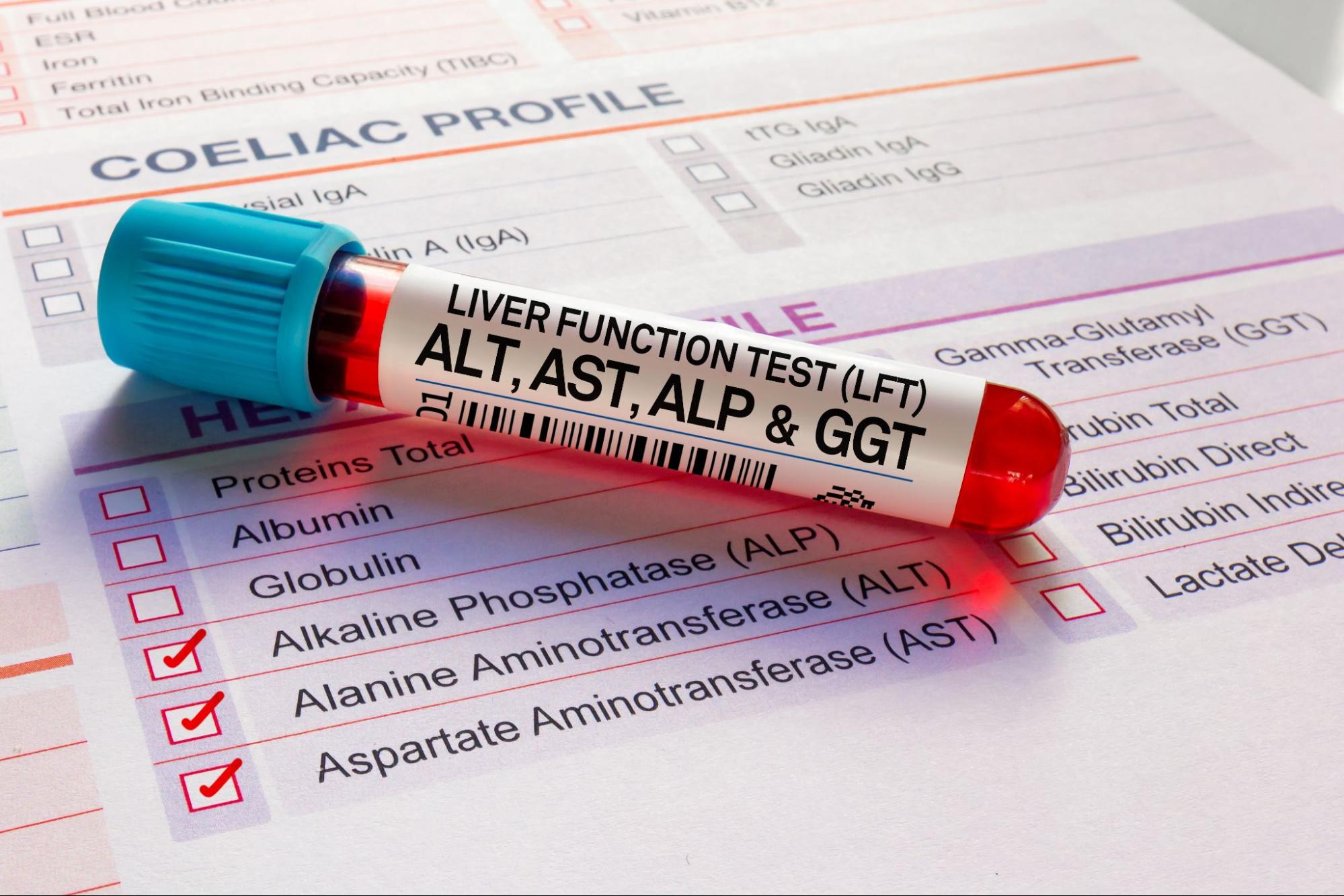
Liver function tests are blood tests that measure enzymes, proteins, and bilirubin to show how well your liver is working and whether it has been injured.
Maybe you opened your patient portal and saw a number flagged in red, or your doctor mentioned "elevated liver enzymes" and moved on to the next topic. That moment can leave you with more questions than answers. The good news is that mild changes are common, and many have simple, treatable explanations. At Northeast Digestive, our gastroenterologists field these questions every day. This guide explains your liver function tests result by result: what each number means, what commonly causes abnormal readings, and what usually happens next.
Liver Function Tests at a Glance
What are liver function tests?
Liver function tests are a group of blood tests that check how well your liver is working. They measure enzymes such as ALT and AST, proteins such as albumin, and bilirubin.
What do liver enzymes mean?
Liver enzymes such as ALT and AST live inside liver cells. When cells are irritated or damaged, they leak into the bloodstream, so elevated levels indicate liver inflammation or injury. The pattern helps point toward a cause.
What is a normal liver function test result?
Normal liver enzyme levels vary by lab, but ALT and AST usually fall below roughly 50 units per liter in adults. Your report lists your lab's range, and a small difference from it is often not alarming.
What causes elevated liver enzymes?
The most common cause is fatty liver disease. Alcohol, medications and supplements, viral hepatitis, and bile duct problems also raise liver enzymes, and so can strenuous exercise or muscle injury. More than one factor is often involved.
What happens if my results are abnormal?
Your doctor will usually repeat the test, review your medications, and may order more blood tests or an ultrasound. Results that persist or continue to rise call for a gastroenterologist. Many causes are very treatable when found early.
What Are Liver Function Tests?
Liver function tests are blood tests that indicate how well your liver is functioning. Together, the results reveal whether liver cells are inflamed or injured, whether bile is draining normally, and how well the liver is doing its job.
Doctors order them for many reasons: routine screening at a checkup, monitoring medications that can stress the liver, investigating symptoms such as fatigue, abdominal pain, or yellow skin, following a known liver condition, or looking into a finding from other tests.
The results usually arrive as part of a hepatic function panel, also called a liver panel, or as part of a comprehensive metabolic panel, which also checks kidney function, blood sugar, and electrolytes.
The name is a little misleading. Most of these tests do not measure liver function directly. Some, like ALT and AST, indicate liver cell injury. Others, such as ALP and bilirubin, indicate bile flow problems. Only a few, such as albumin and clotting tests, show how well the liver is actually working. Doctors read them together, because the pattern says more than any single number. Below, we break down each test.
Liver Function Test Results Explained
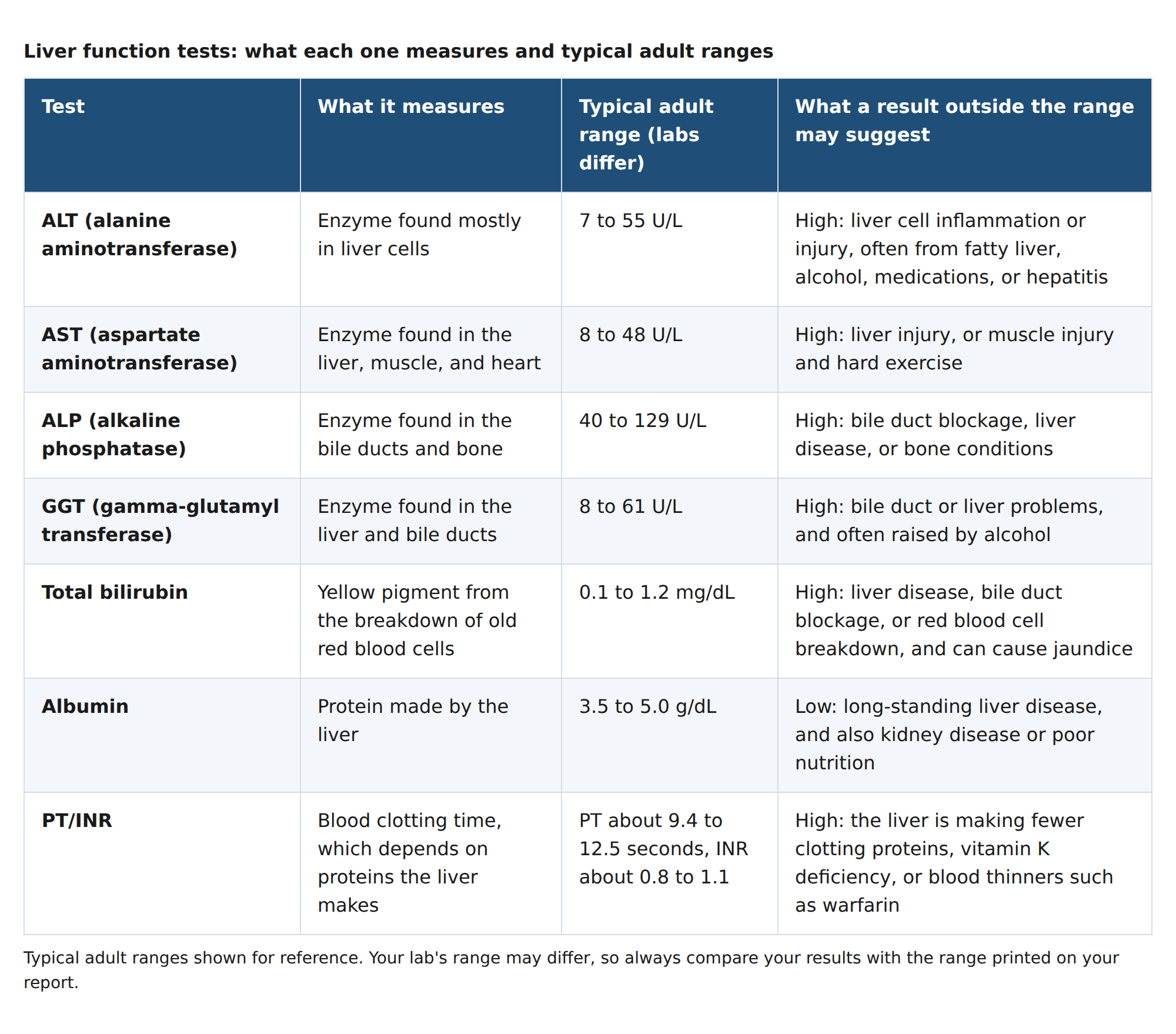
Liver function tests are read as a group. ALT and AST rise when liver cells are injured, ALP, GGT, and bilirubin change when bile flow is disrupted, and albumin and PT/INR show how well the liver makes essential proteins. The table below summarizes each test.
Tests That Signal Liver Cell Injury
ALT and AST are the liver enzymes most people are asking about. They reside within liver cells and leak into the bloodstream when those cells are irritated or damaged. ALT is more liver-specific. AST is also found in muscle, heart, and other organs, so hard exercise or a muscle injury can raise it on its own. Normal liver enzyme levels vary slightly between labs, so compare your number with the range on your report.
Tests That Signal Bile Flow Problems
Bile is made in the liver and drains through small ducts into the intestine. When that flow is blocked or slowed, ALP, GGT, and bilirubin often rise. Because ALP also comes from bone, a high GGT helps show the source is the liver or bile ducts. Bilirubin is the yellow pigment behind jaundice. Gallstones, duct narrowing, and liver disease can raise it, and a mild rise is sometimes harmless, as in Gilbert syndrome.
Tests That Show How Well the Liver Works
Albumin and PT/INR reflect the liver's output. The liver makes albumin, which keeps fluid in the bloodstream, and most of the proteins your blood needs to clot. Low albumin or a prolonged clotting time suggests the liver is not producing enough, which usually indicates advanced or long-standing disease. Kidney disease, poor nutrition, and blood thinners such as warfarin can also affect these results.
Platelet count comes from a separate blood test, the complete blood count, but doctors often check it alongside these results. A low count can be an early clue to advanced liver disease, because scarring raises pressure in the veins leading to the liver, which enlarges the spleen and traps platelets, and a damaged liver makes less of the hormone that signals the bone marrow to produce them. Many other conditions lower platelets too, so the count is read with your other results.
No single number tells the whole story, which is why LFT results are always read together.
What Do Elevated Liver Enzymes Mean?
Elevated liver enzymes mean liver cells are irritated or injured, and the pattern of which enzymes are high points toward the cause. A small rise is common and often temporary, while very high levels need prompt attention. Doctors interpret high ALT and AST alongside the rest of your abnormal liver function tests.
Mild vs. Marked Elevations
Most elevated liver enzymes are mild, generally less than about five times the upper limit of normal. Fatty liver, alcohol, medications, a recent virus, or a hard workout can cause a temporary bump, which is why doctors often repeat the test in a few weeks. Very high levels are different. Numbers in the hundreds or thousands, especially with yellow skin, dark urine, or severe abdominal pain, need prompt medical attention.
Reading the Pattern
Doctors first look at which test group is high. When ALT and AST lead, the problem usually involves liver cell injury. When ALP, GGT, and bilirubin are elevated, the focus shifts to bile flow, and mixed patterns also occur. The AST-to-ALT ratio adds another clue. AST higher than ALT is often seen with alcohol-related injury, while ALT higher than AST is typical of fatty liver disease (MASLD, formerly NAFLD). As scarring advances, AST can catch up to ALT, so the ratio is one clue among many.
Normal Results Do Not Always Mean a Healthy Liver
A normal panel is reassuring, but it cannot rule out liver disease. Enzymes rise only when cells are actively being injured at the time of the test. People with fatty liver can have normal ALT and AST, and scarring (fibrosis) can develop quietly for years without moving these numbers. If you have risk factors such as diabetes, obesity, high cholesterol, or heavy alcohol use, ask your doctor whether further testing makes sense even when your enzymes look normal.
Common Causes of Abnormal Liver Function Tests
What causes elevated liver enzymes? Fatty liver disease is the most common cause in the United States, followed by alcohol, medications and supplements, and viral hepatitis. Bile duct problems, autoimmune and inherited conditions, and conditions outside the liver can also raise them, and more than one cause is often involved.
Fatty Liver Disease (MASLD)
MASLD occurs when extra fat builds up in the liver. It is linked to excess weight, type 2 diabetes, and high cholesterol, and it usually causes no symptoms, so a routine blood test is often how it is found. Read our guide to fatty liver disease for symptoms and treatment.
Alcohol
Regular heavy drinking inflames and injures liver cells, raising AST, ALT, and often GGT. Levels often improve once drinking is reduced or stopped.
Medications and Supplements
Many medicines can stress the liver, most notably acetaminophen (Tylenol) taken above the recommended dose. Some antibiotics, cholesterol medications, and herbal or bodybuilding supplements can also raise enzymes. Tell your doctor about everything you take, and do not stop a prescribed medication on your own.
Viral Hepatitis
Hepatitis B and hepatitis C are viral infections that inflame the liver, often for years without symptoms. Hepatitis C can now be cured with antiviral treatment. Learn more about Hepatitis C and our Hepatitis C clinic.
Bile Duct and Gallbladder Problems
Gallstones or narrowing of the bile ducts can block bile flow and raise ALP, GGT, and bilirubin, sometimes with pain or jaundice. A gastroenterologist can evaluate the ducts with imaging or a procedure called ERCP.
Autoimmune and Inherited Conditions
Autoimmune hepatitis, primary biliary cholangitis, hemochromatosis (iron overload), and Wilson's Disease are less common causes. They are usually found once other explanations have been ruled out.
Causes Outside the Liver
Strenuous exercise and muscle injury can raise AST. Celiac disease can cause mildly elevated liver enzymes that often improve on a gluten-free diet, and thyroid disorders can affect liver tests as well. Learn more about celiac disease.
What Happens After an Abnormal Result?
After abnormal liver function test results, the next steps are usually a repeat test, a review of your medications and history, and targeted follow-up testing to identify the cause. The steps you need depend on your numbers, symptoms, and risk factors.
Repeat Testing and Medication Review
For a mild rise, your doctor may simply repeat the test in a few weeks, since many temporary bumps settle on their own. If the repeat comes back normal, that is usually reassuring, though your doctor may recheck it. Expect questions about alcohol, medications, supplements, family history, and weight changes. Bring a list of everything you take, including over-the-counter products.
Blood Tests for a Cause
If enzyme levels remain elevated, further blood work is performed to identify common causes. A hepatitis panel checks for hepatitis B and C, iron studies look for iron overload, and autoimmune markers screen for immune-related liver disease. Cholesterol, triglycerides, and blood sugar levels help assess the risk of fatty liver. Celiac and thyroid tests are sometimes added.
Imaging
A liver ultrasound is usually the first imaging test. It is painless, uses no radiation, and can show fat in the liver, gallstones, widened bile ducts, and changes in the liver's shape. Ultrasound is less reliable for detecting early scarring, and your doctor may order a CT or MRI when it leaves questions.
Measuring Scarring
Doctors often estimate scarring next. The FIB-4 score uses your age, AST, ALT, and platelet count to estimate the chance of advanced scarring. If the score is not clearly low, a FibroScan measures liver stiffness and fat with a painless test that takes about ten minutes. Advanced scarring is called cirrhosis. A liver biopsy is uncommon and reserved for cases that remain unclear.
Abnormal results that last beyond about six months are considered chronic and call for a specialist evaluation. Catching a liver problem early is the goal, because conditions such as fatty liver disease are often reversible with weight loss and lifestyle change. Most people leave this process with a clear explanation and a plan. For the bigger picture, see our overview, Understanding Liver Disease.
How to Prepare for Your Test and Support Your Liver
Preparing for a liver function test is simple. Whether you need to fast depends on which other tests are ordered with it, so follow your provider's instructions. Tell your provider about every medication and supplement you take, and never stop a prescribed medication on your own.
Do you need to fast for a liver function test? Not always. Liver function tests alone often do not require it, but many panels also check cholesterol or blood sugar, which do. In the day or two before, avoid heavy drinking and very hard exercise, since both can temporarily raise liver enzymes.
Everyday Ways to Support Your Liver
Lowering liver enzymes depends on the cause, but a few habits help most people. Reach and maintain a healthy weight, limit alcohol, exercise regularly, and eat a balanced diet. Use acetaminophen carefully and stay within the label dose, and ask your doctor about a lower limit if you drink regularly or have liver disease. Ask about hepatitis A and B vaccination if you are not already protected. Skip "liver cleanse" products, since some supplements can harm the liver. Enzyme levels often improve within weeks to months once the cause is addressed. For more ideas, read Protecting Your Liver Health.
When to See a Gastroenterologist
Abnormal liver tests call for a specialist when they persist, keep rising, or come with symptoms. A gastroenterologist can identify the cause and guide treatment; if you have been searching for a hepatologist near me, a gastroenterologist is a good first stop. A visit typically includes a review of your results, a physical exam, and a plan for any follow-up testing. Not sure if your symptoms qualify? Our guide to when to see a gastroenterologist can help.
Seek urgent medical care if you notice:
- Yellow skin or eyes
- Dark urine or pale stools
- Severe pain in the upper right abdomen
- Swelling in the abdomen or legs
- Confusion or unusual drowsiness
If symptoms are severe or come on suddenly, go to the nearest emergency room. Early liver disease often causes no symptoms, which is why testing matters. An abnormal result without symptoms still deserves a follow-up.
Frequently Asked Questions
Can stress cause high liver enzymes?
Every day emotional stress has not been shown to directly raise liver enzymes, but it can lead to habits that do, such as heavier drinking, poor sleep, and less healthy eating. Serious physical stress on the body, such as a major illness, can also affect liver tests. If your enzymes are high, do not assume stress is the cause.
Can exercise raise liver enzymes?
Yes. Hard workouts, especially heavy weightlifting and long endurance events, can break down muscle and raise AST and sometimes ALT. The rise is usually temporary and settles within a week or so. If you exercise intensely, mention it to your doctor and skip hard workouts for a day or two before your blood draw.
How long does it take for liver enzymes to normalize?
It depends on the cause. A rise from exercise or a short illness often settles within days to weeks, and alcohol or medication-related rises often improve within weeks of stopping. Enzymes associated with fatty liver disease can take several months to normalize with weight loss and lifestyle changes. Your doctor will recheck to confirm.
Can you have liver disease with normal liver function tests?
Yes. Enzymes rise only when cells are actively being injured, so early fatty liver, hepatitis, and even scarring can be present while ALT and AST stay normal. If you have risk factors such as diabetes, obesity, or heavy alcohol use, ask your doctor about further testing, such as a FIB-4 score or FibroScan.
Can a cold or medication affect liver test results?
Yes. Viral illnesses such as the flu, common medications like acetaminophen, and some supplements can temporarily raise liver enzymes. If you were sick, drinking heavily, or started something new before your test, tell your doctor. A repeat test a few weeks later often shows whether the change was temporary.
Is a slightly elevated ALT serious?
A slightly elevated ALT is common and is often not serious, particularly when it is temporary. Still, it can be an early sign of fatty liver, so it is worth repeating the test and discussing it with your doctor, especially if it persists beyond a few weeks or you have risk factors.
Get Answers About Your Liver Tests
A liver function test result is a starting point, and you do not have to work through it alone. Northeast Digestive has cared for patients for over 50 years as an independent practice, with an on-site endoscopy center at every location. If you are looking for a gastroenterologist in Concord, NC, or nearby Salisbury, bring your results to one of our gastroenterologists, and we will explain what they mean and what comes next. Whether your numbers were flagged mildly or you have lingering symptoms, we are here to help. Find your nearest office, request an appointment, or call (704) 783-1840.